
“One in four adolescents worldwide reported not getting at least 60 minutes of physical activity on any day in the previous week, according to new global estimates released by the World Health Organization (WHO) on Wednesday. That amounts to some 240 million young people aged 11 to 17 who reported not completing at least 60 minutes of moderate-to-vigorous physical activity on a single day.
On average, adolescents reported being active on just 2.7 days a week, and only 14 per cent reported being active on all seven. The findings point to a lack of global progress over the past 15 years, with levels of physical activity among adolescents virtually unchanged since 2010. “For 15 years, the world has made almost no progress in getting young people moving, and girls are being left furthest behind,” said WHO Director-General Tedros Adhanom Ghebreyesus. “The answer is not to tell adolescents to try harder. It is to build schools, streets, and communities where moving, playing and being active is safe, easy and normal.””
Getting Young People Moving
“No country is on track to meet the global target of a 15 per cent relative reduction in physical inactivity by 2030, and without accelerated action, adolescent inactivity is projected to remain largely unchanged for the rest of the decade, the report warns. Physical inactivity is a major risk factor for heart disease, type 2 diabetes, and some cancers, making it critical to help young people develop active habits early in life.
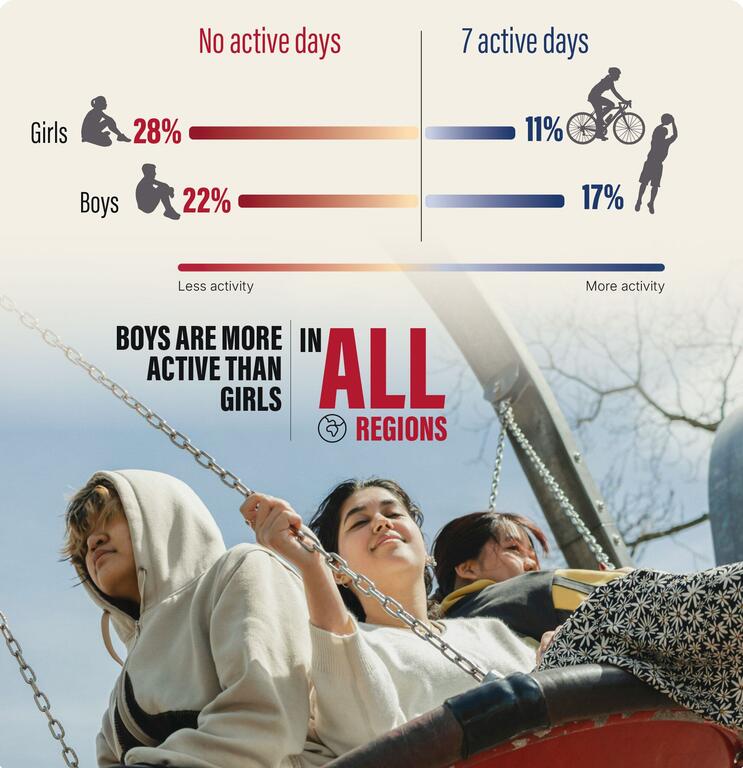
The new study draws on 389 population-based surveys from 140 countries and territories, involving more than 3.2 million adolescents. The gender gap remains strikingly persistent. Some 28 per cent of girls reported no active days, compared with 22 per cent of boys, while only 11 per cent of girls reported being active every day, compared with 17 per cent of boys. Girls were less active than boys in almost every country and every WHO region. There were also stark differences between countries. In some, just 4 per cent of adolescents reported no active days; in others, the figure exceeded 40 per cent.”